How Can a Paperless Receipts Business Strategy Help Canadian Companies Go Digital in 2025?

If you run a business in Canada, paper receipts may be costing you more than you think.
Every printed receipt adds up through:
- Paper costs
- Ink or thermal printing supplies
- Printer maintenance
- Staff time
- Storage needs
- Waste
- Customer inconvenience
More importantly, customers often lose paper receipts, ignore them, or throw them away immediately.
This is where a Paperless Receipts Business strategy becomes useful.
Paperless receipts give businesses a smarter alternative by delivering transaction records digitally instead of printing a paper slip by default.
For Canadian businesses, this shift can help:
- Reduce overhead
- Improve customer experience
- Support sustainability goals
- Make records easier to store
- Simplify returns and warranties
- Improve tax and transaction record keeping
Angel-Earth Corporation is developing dTransfer, a digital transfer solution built for Canadian businesses ready to move beyond paper.
This guide explains why paperless receipts matter, how Canadian businesses can make the switch, and how a Paperless Receipts Business strategy can help companies reduce waste while improving operations.
What Is a Paperless Receipts Business Strategy?
A Paperless Receipts Business strategy means replacing printed receipts with digital receipt delivery.
Instead of automatically printing a receipt after every transaction, the business can send the receipt digitally through:
- SMS
- A customer account
- A dedicated app
- A digital transfer system
- A secure cloud-based platform
This gives customers a digital record they can access later.
A Paperless Receipts Business strategy can apply to many types of companies, including:
- Retail stores
- Restaurants
- Cafés
- Service businesses
- Healthcare providers
- Salons
- Trades businesses
- Local shops
- Canadian SMEs
The goal is simple: reduce paper while making receipts easier for customers and businesses to manage.
Why Do Paperless Receipts Matter for Canadian Businesses?
Paperless receipts matter because paper receipts create financial, operational, and environmental costs.
Many businesses print receipts automatically even when customers do not want them.
That creates waste every day.
Paper receipts can also create problems because they are:
- Easy to lose
- Hard to search
- Often thrown away
- Difficult to organize
- Inconvenient for returns
- Poor for long-term record keeping
- Wasteful when printed unnecessarily
A Paperless Receipts Business strategy gives companies a more modern way to manage transactions.
Instead of relying on small paper slips, businesses can create digital records that are easier to send, store, and retrieve.
For Canadian retailers, Alberta restaurants, Edmonton businesses, and local service providers, this shift is both practical and overdue.
Why Are Paper Receipts More Expensive Than They Look?
Paper receipts may seem inexpensive, but the costs add up over time.
Businesses often pay for:
- Receipt rolls
- Receipt printers
- Printer maintenance
- Replacement parts
- Thermal printing supplies
- Staff time spent fixing receipt issues
- Storage for paper records
- Manual filing
- Paper waste management
For a business processing dozens or hundreds of transactions per day, these costs can become significant.
A Paperless Receipts Business strategy can help reduce these recurring expenses.
Instead of paying to print a receipt that may be thrown away within minutes, businesses can send a digital receipt that is easier for the customer to keep.
This makes paperless receipts both a cost-saving tool and an operational improvement.
Why Is Receipt Waste a Problem in Canada?
Paper receipt waste is a major issue because many receipts have a very short useful life.
A customer may receive a receipt and immediately:
- Throw it away
- Leave it behind
- Lose it in a bag
- Misplace it in a wallet
- Forget where it was stored
- Damage it before they need it
Many receipts are printed on thermal paper, which can be difficult to recycle through standard municipal programs.
That means many receipts end up in landfill.
For businesses trying to reduce waste, this is a clear problem.
A Paperless Receipts Business strategy reduces the need for unnecessary printed receipts by giving customers a digital version instead.
This helps businesses support sustainability goals while also improving convenience.
How Do Paperless Receipts Improve Customer Experience?
Paperless receipts can create a better customer experience because digital records are easier to keep and search.
Customers may need receipts for:
- Returns
- Exchanges
- Warranties
- Expense reports
- Tax records
- Reimbursements
- Personal budgeting
- Proof of purchase
Paper receipts are easy to lose.
Digital receipts are easier to find.
A customer can search their email, app, or digital account instead of digging through:
- Wallets
- Purses
- Bags
- Drawers
- Filing folders
- Old envelopes
- Glove compartments
A Paperless Receipts Business strategy makes the receipt experience cleaner and more convenient.
It also shows customers that the business is modern, organized, and thoughtful about reducing waste.
How Can Paperless Receipts Support Sustainability and Brand Reputation?
Canadian consumers increasingly notice when businesses make more responsible choices.
Going paperless can help a business show that it is reducing unnecessary waste.
A Paperless Receipts Business strategy can support a stronger brand reputation because it signals that the company is:
- Environmentally aware
- Modern
- Efficient
- Customer-focused
- Reducing paper use
- Moving toward cleaner operations
This matters for businesses that want to appeal to eco-conscious customers.
For Edmonton, Alberta, and Canadian businesses, paperless receipts can become part of a larger sustainability story.
The business can communicate that it is reducing printed materials and moving toward digital records.
This is not only better for the environment. It can also help customers feel better about supporting the business.
How Do Paperless Receipts Improve Operational Efficiency?
Paper receipts create manual work.
Staff may have to:
- Replace receipt rolls
- Fix receipt printer issues
- Reprint lost receipts
- Search for transaction records
- File paper documents
- Handle receipt-related customer service issues
- Store paper copies
- Manage printing supplies
Digital receipts reduce many of these problems.
A Paperless Receipts Business strategy allows receipts to be:
- Delivered digitally
- Stored digitally
- Searched quickly
- Retrieved more easily
- Connected to transaction records
- Organized without filing cabinets
This gives staff more time to focus on customers instead of paper handling.
For small businesses with lean teams, this can make daily operations smoother.
How Can Paperless Receipts Help With Business Records?
Digital receipts can make record keeping cleaner and more accurate.
Businesses often need receipts and transaction records for:
- Tax filing
- Bookkeeping
- Customer service
- Returns
- Warranty claims
- Audits
- Internal reporting
- Sales analysis
Paper receipts are harder to organize and easier to lose.
Digital receipts can be stored in a cloud-based system and searched when needed.
A Paperless Receipts Business strategy helps businesses keep cleaner records because transaction documents are created digitally from the start.
This can reduce last-minute stress during tax season and make it easier to retrieve information when needed.
Are Digital Receipts Accepted for Canadian Business Records?
The Canada Revenue Agency accepts digital records when they are stored properly and are accessible if requested.
This means digital receipts can support business record keeping when the business has a reliable system.
Businesses should make sure digital records are:
- Complete
- Accurate
- Secure
- Organized
- Easy to retrieve
- Stored for the required period
- Backed up properly
A Paperless Receipts Business strategy does not remove record-keeping responsibilities.
It simply makes those responsibilities easier to manage.
Businesses should still follow CRA record retention requirements and keep receipts in a system that can be accessed when needed.
How Does Privacy Compliance Affect Paperless Receipts?
Privacy matters when businesses collect customer contact information for digital receipt delivery.
If a business asks for an email address or phone number to send a receipt, it needs to handle that information responsibly.
Canadian businesses should pay attention to privacy requirements, including PIPEDA.
A Paperless Receipts Business strategy should include:
- Clear customer consent
- Secure data storage
- Limited use of customer contact information
- Transparent communication
- Proper access controls
- A clear opt-in process
- A way to protect customer information
Customers should understand why their information is being collected and how it will be used.
This helps protect the business and creates a better customer experience.
Which Businesses Benefit Most From a Paperless Receipts Business Strategy?
Many businesses can benefit from paperless receipts.
The strongest fit is usually businesses that process frequent transactions or manage many customer records.
These may include:
- Retail stores
- Quick-service restaurants
- Cafés
- Salons
- Healthcare providers
- Service businesses
- Trades businesses
- Local shops
- Canadian SMEs
- Businesses with high receipt volume
The more receipts a business prints, the more value it can gain by switching to digital receipts.
A Paperless Receipts Business strategy can create immediate savings for high-volume businesses while also improving customer convenience.
How Can Retail Stores Use Paperless Receipts?
Retail stores often print many receipts every day.
This can include receipts for:
- Clothing purchases
- Beauty products
- Pet supplies
- Groceries
- Home goods
- Gifts
- Specialty items
- Product returns
- Exchanges
A Paperless Receipts Business strategy can help retailers by making receipts easier for customers to keep.
This is especially useful for:
- Returns
- Exchanges
- Warranty claims
- Loyalty programs
- Customer service
- Purchase history
Retailers can also reduce checkout clutter and paper waste.
For customers, digital receipts are easier to search when they need proof of purchase.
How Can Restaurants and Cafés Use Paperless Receipts?
Restaurants and cafés often process high volumes of smaller transactions.
Many customers do not want a paper receipt for a coffee, lunch order, snack, or takeout purchase.
A Paperless Receipts Business strategy can help food service businesses:
- Reduce receipt paper usage
- Speed up checkout
- Create cleaner operations
- Offer digital proof of purchase
- Reduce paper waste
- Improve customer convenience
Quick-service restaurants can especially benefit because speed and simplicity matter.
Digital receipts can also help customers who need records for work meals, expense reports, or tax purposes.
How Can Service Businesses Use Paperless Receipts?
Service businesses often need to provide transaction records, invoices, and customer documents.
This can include:
- Salons
- Spas
- Repair businesses
- Clinics
- Local contractors
- Trades businesses
- Wellness businesses
- Professional services
A Paperless Receipts Business strategy can help service businesses send receipts and transaction records without relying on printed copies.
This is useful because service businesses often operate across:
- Job sites
- Client locations
- Multiple branches
- Mobile appointments
- Customer homes
- Office visits
Digital receipts make records easier to send and easier to retrieve later.
How Can Healthcare Providers Benefit From Paperless Receipts?
Healthcare and wellness providers often need to provide receipts for insurance, reimbursement, and patient records.
This can include:
- Clinics
- Dental offices
- Physiotherapy clinics
- Massage therapy clinics
- Wellness centres
- Medical service providers
Paperless receipts can help these businesses reduce front-desk paper handling.
Customers and patients may also prefer digital receipts because they are easier to submit for reimbursement.
A Paperless Receipts Business strategy can support cleaner record keeping, smoother administration, and better customer convenience.
Businesses in sensitive industries should also be especially careful about privacy and consent when collecting customer information.
How Can Businesses Switch to Paperless Receipts?
Switching to paperless receipts does not need to be overwhelming.
Most businesses can transition in stages.
A simple process includes:
- Auditing the current receipt process
- Choosing a digital receipt platform
- Integrating with the point-of-sale system
- Training staff
- Communicating the change to customers
- Monitoring adoption and feedback
- Keeping a paper option during the transition
A Paperless Receipts Business strategy works best when it is practical and easy for staff to follow.
The goal is to reduce unnecessary paper without creating confusion at checkout.
How Should Businesses Audit Their Current Receipt Process?
The first step is understanding the current receipt process.
Businesses should review:
- How many receipts are printed daily
- How much receipt paper is used weekly
- How often printers need maintenance
- How much is spent on receipt rolls
- How often customers decline receipts
- How often receipts are reprinted
- How receipts are stored
- How paper records are used for returns or accounting
This gives the business a baseline.
After switching to paperless receipts, the business can compare:
- Paper savings
- Cost savings
- Customer adoption
- Staff feedback
- Checkout speed
- Record retrieval improvements
A receipt audit helps show the real value of a Paperless Receipts Business strategy.
How Should Businesses Choose a Digital Receipt Platform?
Businesses should choose a platform that fits Canadian business needs.
A strong digital receipt platform should support:
- Secure receipt delivery
- Simple customer opt-in
- POS integration
- Canadian privacy expectations
- Digital record storage
- Easy search
- Reliable backup
- Clear customer communication
- Scalable business use
The platform should also be easy for staff to use.
If the system is confusing, staff may avoid it or make mistakes at checkout.
A Paperless Receipts Business strategy works best when the technology is simple, secure, and built for daily business operations.
Why Does POS Integration Matter?
Point-of-sale integration matters because paperless receipts should not slow down checkout.
The digital receipt solution should connect smoothly with the business’s existing POS process.
Businesses should test:
- Receipt delivery
- Customer opt-in flow
- Transaction accuracy
- Tax formatting
- Staff workflow
- Customer experience
- Error handling
- Digital record storage
A smooth checkout experience is essential.
If the process feels slow or confusing, customers and staff may resist the change.
A good Paperless Receipts Business strategy should make checkout cleaner, not more complicated.
Why Should Staff Training Be Simple?
Staff training is important because the checkout experience depends on employees using the system correctly.
Training should cover:
- How to offer digital receipts
- How to explain the change to customers
- How to collect consent properly
- How to send a receipt
- How to handle customers who prefer paper
- How to fix simple errors
- How to protect customer information
Training does not need to be long.
It should be clear, practical, and focused on the customer-facing process.
A Paperless Receipts Business strategy is easier to adopt when the team feels confident using it.
How Should Businesses Communicate the Change to Customers?
Customers should understand why the business is moving to digital receipts.
Businesses can communicate the change through:
- Checkout signage
- Social media posts
- Email announcements
- Website updates
- Staff conversations
- Digital campaign messages
The message should be simple.
For example:
“We are moving to digital receipts to reduce paper waste and make it easier for you to keep your records.”
This message explains both the customer benefit and the sustainability benefit.
A Paperless Receipts Business strategy works better when customers understand the reason behind the change.
Should Businesses Still Offer Paper Receipts During the Transition?
Yes, businesses should usually keep a paper option during the transition.
Some customers may still prefer paper receipts.
Others may not want to share an email address or phone number.
A gradual transition can reduce frustration.
Businesses can:
- Offer digital receipts first
- Keep paper receipts available by request
- Explain the benefits of digital receipts
- Monitor customer adoption
- Adjust the process based on feedback
A Paperless Receipts Business strategy should improve the customer experience, not force customers into a process they do not understand.
How Can Businesses Monitor and Optimize Paperless Receipt Adoption?
After launch, businesses should track how customers and staff respond.
Useful metrics include:
- Digital receipt adoption rate
- Paper receipt reduction
- Customer feedback
- Staff feedback
- Checkout speed
- Receipt retrieval requests
- Cost savings
- Printer supply reduction
This helps the business improve the process over time.
For example:
- If customers are confused, signage may need to be clearer.
- If staff are inconsistent, training may need to be repeated.
- If adoption is strong, the business may reduce paper supply orders.
- If customers still request paper, the business can keep a limited option.
A Paperless Receipts Business strategy becomes stronger when the business measures and improves it.
What Mistakes Should Businesses Avoid When Going Paperless?
Going paperless can be simple, but businesses should avoid common mistakes.
Common mistakes include:
- Skipping privacy compliance
- Choosing a platform not built for Canada
- Removing paper receipts too quickly
- Ignoring staff training
- Failing to explain the change to customers
- Not promoting the environmental benefit
- Using a system that does not integrate with POS
- Forgetting to store records properly
These mistakes can create frustration and reduce adoption.
A good Paperless Receipts Business strategy should be secure, customer-friendly, and easy to use.
Why Is Skipping Privacy Compliance a Problem?
Skipping privacy compliance is risky because digital receipts often require customer contact information.
If a business collects email addresses or phone numbers, it needs to do so responsibly.
Businesses should avoid:
- Collecting information without consent
- Using receipt information for unrelated marketing without permission
- Storing customer information insecurely
- Sharing customer data without clear purpose
- Failing to explain why information is needed
A Paperless Receipts Business strategy should include privacy protection from the beginning.
This helps the business build trust and avoid compliance issues.
Why Should Businesses Avoid Platforms Not Built for Canada?
Some digital receipt tools may be designed for other markets.
Canadian businesses should make sure their platform can handle Canadian business needs.
This may include:
- GST
- HST
- PST
- Canadian tax formatting
- Canadian privacy expectations
- Canadian business workflows
- Local compliance considerations
A platform that does not fit the Canadian market can create extra work later.
A Paperless Receipts Business strategy works best when the tool is designed with Canadian businesses in mind.
Why Should Businesses Avoid Removing Paper Too Quickly?
Removing paper receipts too quickly can frustrate customers.
Some customers may still need paper receipts for personal reasons.
Others may not be comfortable with digital receipt delivery.
A better approach is to transition gradually.
Businesses can:
- Offer digital as the default
- Keep paper available by request
- Explain the benefits of digital receipts
- Give customers time to adjust
- Monitor feedback
This makes the switch smoother.
A Paperless Receipts Business strategy should balance sustainability with customer choice.
Why Should Businesses Promote the Environmental Benefit?
Going paperless is a strong brand story.
Businesses should not hide it.
Customers may appreciate knowing that the business is taking real steps to reduce waste.
Businesses can communicate messages like:
- “We are reducing paper waste with digital receipts.”
- “Digital receipts help us cut unnecessary printing.”
- “We are making checkout cleaner and more sustainable.”
- “Choose digital receipts to help reduce paper waste.”
This helps customers understand the value of the change.
A Paperless Receipts Business strategy can improve both operations and brand reputation when communicated clearly.
What Is Angel-Earth dTransfer?
Angel-Earth Corporation is developing dTransfer, a digital transfer solution for Canadian businesses.
dTransfer is designed to help businesses send:
- Receipts
- Documents
- Transaction records
- Customer files
- Business records
- Digital documents
The goal is to help businesses move beyond paper and manage digital transfers more easily.
dTransfer is built with Canadian businesses in mind, especially Alberta and Edmonton businesses.
It is designed for:
- Retailers
- Restaurants
- Service businesses
- Canadian SMEs
- Local operators
- Businesses ready to reduce paper
dTransfer is coming soon.
Canadian businesses that want early access can connect with the Angel-Earth team.
How Does dTransfer Fit Into the Angel-Earth Platform?
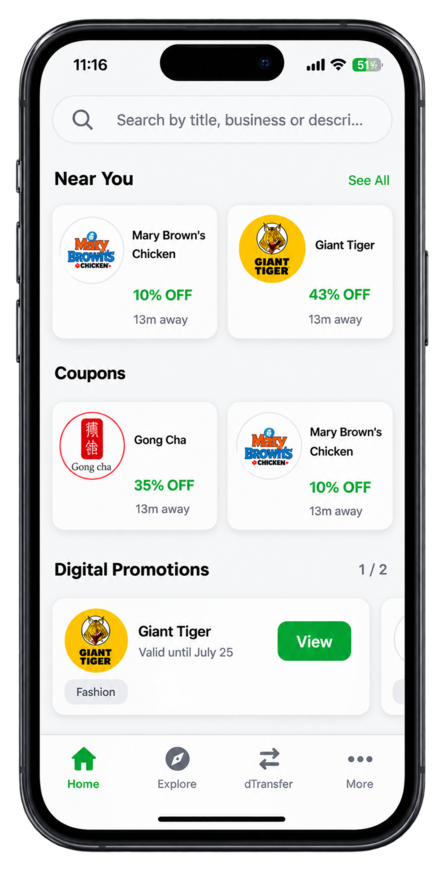
Angel-Earth already offers digital tools that help local businesses grow and operate smarter.
These include:
- Radius Push Notifications
- Digital Promotions
- Digital Coupons
- Cloud Storage
dTransfer is the next step in Angel-Earth’s commitment to helping Canadian businesses move beyond paper.
Together, these tools help businesses:
- Promote digitally
- Reduce paper waste
- Store information more efficiently
- Reach customers more directly
- Improve operations
- Build more sustainable workflows
A Paperless Receipts Business strategy fits naturally into this broader digital shift.
Angel-Earth is building tools that help Canadian businesses grow smarter, spend less, and operate more responsibly.
Why Should Canadian Businesses Move Toward Paperless Receipts Now?
The shift to paperless receipts is not just a trend.
It is a fundamental change in how Canadian businesses operate.
Paperless receipts help businesses:
- Reduce paper waste
- Cut costs
- Improve customer experience
- Support CRA-compliant record keeping
- Build a more sustainable brand
- Store records more efficiently
- Create better transaction data
- Reduce manual paper handling
The technology exists.
The consumer appetite is there.
The regulatory environment supports digital records when they are stored properly.
What businesses need now is a trusted Canadian solution built for their market.
A Paperless Receipts Business strategy helps companies prepare for the future while improving operations today.
How Can Businesses Get Started With a Paperless Receipts Business Strategy?
Businesses can start by reviewing their current receipt process and identifying where digital delivery can replace paper.
The first steps are:
- Count how many receipts are printed daily.
- Review receipt paper and printer costs.
- Choose a digital receipt solution.
- Train staff on the new process.
- Communicate the change to customers.
- Keep paper available during the transition.
- Track adoption and savings.
Angel-Earth Corporation is developing dTransfer to help Canadian businesses make this shift.
Built in Canada and designed for Canadian businesses, dTransfer will make going paperless simple, compliant, and practical.
Ready to go paperless?
Visit Angel-Earth to learn more about Angel-Earth products and services, including Digital Promotions, Digital Coupons, Radius Push Notifications, Cloud Storage, and dTransfer.
Sources Referenced in This Article
Statistics Canada:
https://www.statcan.gc.ca
Government of Canada:
https://www.canada.ca
Angel-Earth Corporation:
https://www.angel-earth.ca
Ashutosh Kaushik
Content StrategistTrending Now
Most Popular
Ready to Transform?
Get started with our premium services and pricing plans designed for your success.