How Is Digital Receipt Management in Canada Helping Businesses Send Receipts and Documents Without Printing?
On This Page
Every time a customer makes a purchase at a Canadian retail store or restaurant, a small receipt is usually printed, handed across the counter, and often thrown away within minutes.
For years, this felt normal.
Paper receipts were simply part of doing business. The same was true for:
Invoices
Signed forms
Delivery notes
Supplier documents
Internal records
Customer files
Business reports
If something needed to be shared, it was usually printed, scanned, mailed, filed, or stored in a folder.
But Canadian businesses are starting to question whether all that paper is actually necessary.
This is where Digital Receipt Management in Canada is gaining momentum.
Businesses are looking for faster, cleaner, and more practical ways to handle everyday documents.
The shift is being driven by:
Cost savings
Customer convenience
Environmental concerns
Easier record keeping
Faster document sharing
Better organization
Digital records are easier to organize than piles of paper.
This guide explains what Digital Receipt Management in Canada looks like, why Canadian businesses are moving toward paperless workflows, and how dTransfer helps businesses send receipts and documents without printing a thing.
What Is the Real Problem With Paper Receipts?
Paper receipts may seem small, but across hundreds or thousands of transactions, they create a major operational burden.
A busy restaurant, retail store, or service business can print thousands of receipts every month.
Most of those receipts are never used again.
Customers may:
Lose them
Throw them away
Forget where they put them
Damage them
Forget to keep them for returns or records
Businesses still pay for:
Receipt paper
Printer maintenance
Printing supplies
Storage
Staff time
Manual filing
The issue is not only the receipt itself.
It is the system behind it.
Paper-based operations create extra work at almost every step.
Staff may have to:
Print documents
File them
Search for them
Scan them
Recreate them if they get lost
Store them in folders or boxes
Digital Receipt Management in Canada solves this by moving receipts and documents into a system that is easier to send, store, search, and retrieve.
Why Is the Environmental Cost of Paper Receipts Significant?
One of the clearest reasons businesses are moving away from paper receipts is environmental impact.
Many receipts are printed on thermal paper.
Thermal paper is often coated with chemicals that allow text to appear through heat rather than ink.
Because of that coating, thermal receipts are not recyclable in many jurisdictions and can contaminate recycling streams.
That means many paper receipts end up in the garbage, even when customers think they are recycling them.
For businesses trying to reduce waste, this is a problem.
Paper receipts create a constant stream of material that often has a very short useful life.
Digital receipts help reduce this waste by replacing the printed slip with a digital record.
Customers can access that digital record from:
Their phone
Their email
A secure digital system
Their personal files
For Canadian businesses that want to modernize operations and reduce unnecessary paper use, Digital Receipt Management in Canada is a simple but meaningful step.
How Does the Financial Cost of Paper Add Up Over Time?
The cost of a single receipt may seem tiny, but the total cost builds quickly.
Businesses pay for:
Receipt paper
Printers
Ink or thermal printing supplies
Printer maintenance
Storage
Staff time spent managing paper records
Replacement supplies
Filing materials
A small business may not notice the cost day by day.
However, across a full year, paper-based document handling can become expensive.
Digital Receipt Management in Canada does not mean there are no costs at all. Businesses may still use software tools or digital platforms.
However, it can reduce the ongoing expenses connected to:
Printing
Storing
Filing
Searching
Reprinting
Manually handling paper documents
For businesses with high transaction volume, even small savings per transaction can become meaningful over time.
This is why Digital Receipt Management in Canada is becoming more relevant for retailers, restaurants, and service businesses that handle many transactions.
Why Do Customers Prefer Digital Receipt Management in Canada?
Customers are becoming more comfortable with digital receipts and online records.
Many people already use:
Digital banking
Mobile wallets
Online ordering
Email confirmations
App-based services
Digital loyalty programs
Online customer accounts
Receiving a receipt digitally feels natural because it fits how customers already manage information.
Digital receipts are easier for customers to:
Search later
Store for returns
Use for warranty claims
Send for expense reports
Keep without clutter
Access from their phone
Avoid losing
Paper receipts are easy to lose.
Digital receipts are easier to find.
For customers who care about convenience, Digital Receipt Management in Canada creates a smoother experience.
What Does Digital Receipt Management in Canada Actually Look Like?
Moving to digital receipts does not need to be complicated.
At its core, Digital Receipt Management in Canada means receipts and documents are created, sent, and stored electronically instead of being printed by default.
This can include:
Customer receipts
Invoices
Quotes
Purchase orders
Delivery notes
Signed documents
Supplier records
Tax documents
Internal business records
Customer documents
Reports
Instead of printing a document and handing it over physically, the business can send it digitally through a secure system.
That creates a faster process for both the business and the customer.
For many companies, Digital Receipt Management in Canada is not only about replacing paper receipts. It is about making daily document handling simpler.
How Are Receipts Delivered Digitally?
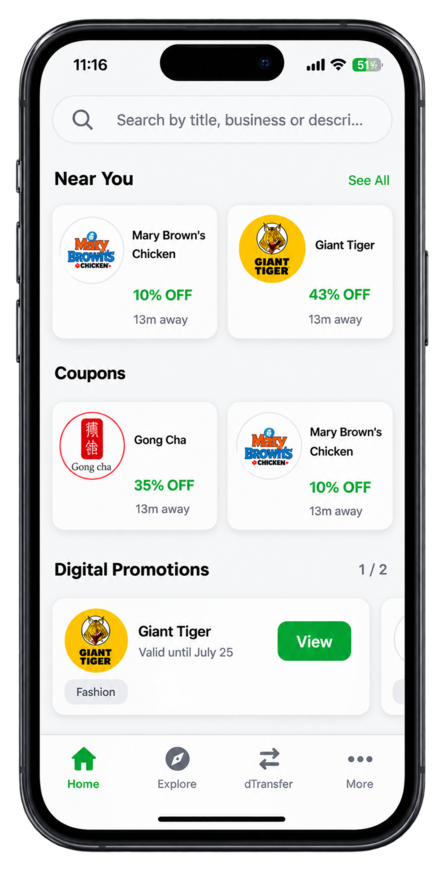
With dTransfer, businesses can send receipts directly to customers in a digital format.
The customer receives a record they can:
Keep
Search
Access later
Use for returns
Use for warranty claims
Use for tax records
Use for expense reports
The business reduces unnecessary paper usage and creates a cleaner transaction process.
This is especially useful for businesses where customers often need receipts later, such as:
Retail stores
Restaurants
Service businesses
Trades
Repair businesses
Professional services
A customer who needs a receipt no longer has to dig through:
Bags
Wallets
Drawers
Folders
Old envelopes
Glove compartments
They can simply search for the digital version.
That convenience makes the customer experience better while also reducing paper waste.
How Can Digital Receipt Management in Canada Help Businesses Transfer Documents Without Printing?
Digital Receipt Management in Canada is not only about receipts.
Businesses also send many other documents every day.
These can include:
Invoices
Contracts
Forms
Delivery notes
Purchase orders
Reports
Records
Customer documents
Supplier documents
Traditionally, these documents may be:
Printed
Signed
Scanned
Mailed
Filed
Stored physically
Sent back and forth by hand
That creates unnecessary steps.
With dTransfer, businesses can move toward digital document transfer.
Documents can be sent electronically instead of being printed first.
This helps reduce:
Manual admin work
Paper use
Scanning delays
Lost documents
Physical storage needs
Back-and-forth communication
Time spent searching for records
For businesses that send documents regularly, Digital Receipt Management in Canada can make daily operations feel much more organized.
How Do Searchable Records Replace Physical Filing?
One of the biggest benefits of Digital Receipt Management in Canada is searchability.
Paper records are hard to search.
If a customer needs an old receipt, someone may have to go through:
Folders
Drawers
Boxes
Filing cabinets
Storage rooms
Old paper records
If a business needs an invoice from last year, staff may spend time trying to remember where it was filed.
Digital records are much easier to retrieve.
Businesses can search by:
Date
Customer
Vendor
Amount
Document type
Transaction
Project
Location
Category
This saves time and reduces stress, especially during:
Tax season
Audits
Returns
Customer service requests
Expense reporting
Warranty claims
Internal reviews
For Canadian businesses with lean teams, saving time on document search can make a real difference.
Which Canadian Businesses Benefit Most From Digital Receipt Management in Canada?
Digital Receipt Management in Canada can help almost any business.
However, some industries benefit especially strongly because they handle high transaction volumes or frequent documentation.
Businesses that may benefit include:
Retail stores
Quick service restaurants
Caf�s
Trades businesses
Service businesses
Accountants
Bookkeepers
Repair businesses
Professional service firms
The more receipts, invoices, and documents a business handles, the more useful Digital Receipt Management in Canada becomes.
For these businesses, going paperless can reduce clutter, save time, and make customer service easier.
How Can Retail Stores Benefit From Digital Receipt Management in Canada?
Retail businesses often print large numbers of receipts every day.
A boutique, pet store, grocery store, beauty retailer, or specialty shop may process dozens or hundreds of transactions daily.
Over time, that adds up to a major amount of paper.
Switching to digital receipts helps retail stores:
Reduce paper costs
Speed up checkout
Give customers easier records
Improve return handling
Reduce receipt clutter
Create a more modern checkout experience
Support cleaner operations
It also helps with returns and customer service because digital receipts are easier to find than paper ones.
For retail stores, Digital Receipt Management in Canada can be a simple way to improve both operations and the customer experience.
How Can Quick Service Restaurants Use Digital Receipt Management in Canada?
Quick service restaurants and caf�s often process high volumes of small transactions.
That means they can go through receipt paper quickly, especially during rush periods.
Many customers do not even want the receipt and throw it away immediately.
Digital Receipt Management in Canada helps restaurants reduce unnecessary printing while still giving customers proof of purchase when they need it.
For restaurants, digital receipts can help:
Reduce paper waste
Lower receipt paper usage
Keep checkout cleaner
Support faster transactions
Give customers a digital proof of purchase
Create a more modern customer experience
For restaurants trying to appear more modern and environmentally conscious, this is a simple operational upgrade.
How Can Trades and Service Businesses Use Digital Document Transfer?
Trades and service businesses handle many important documents.
These may include:
Estimates
Invoices
Work orders
Signed approvals
Customer records
Service reports
Project documents
Before-and-after notes
Paper documents are especially inconvenient in this environment because work often happens:
On job sites
In vehicles
Across multiple locations
Outside the office
At a customer�s home or business
A plumber, electrician, contractor, repair technician, or mobile service provider can benefit from digital document transfer because records can be sent and stored without needing to return to an office printer.
This makes the business look more professional and keeps documents easier to access later.
Digital Receipt Management in Canada is especially useful for service businesses because it allows documents to move with the team, not stay stuck in the office.
How Can Accountants and Bookkeepers Benefit From Digital Records?
Accountants and bookkeepers also benefit when clients use Digital Receipt Management in Canada.
Instead of receiving envelopes full of paper receipts, they can access organized digital records.
This makes many tasks faster and easier, including:
Tax preparation
Bookkeeping
Reconciliation
Record review
Expense tracking
Audit preparation
Monthly reporting
For small businesses, better organization can also reduce last-minute stress during tax season.
Digital records help accountants and bookkeepers work with cleaner information.
They also reduce the time spent sorting, scanning, and interpreting messy paper files.
How Does Digital Receipt Management in Canada Support CRA Compliance?
Canadian businesses must keep proper records for tax purposes.
The Canada Revenue Agency generally requires businesses to keep records and supporting documents for six years from the end of the last tax year they relate to.
The CRA also allows electronic records, provided they are kept in an electronically readable format and are available when required.
This means Digital Receipt Management in Canada can support compliance when records are stored properly, securely, and accessibly.
Businesses should still make sure their digital records are:
Complete
Organized
Backed up
Easy to retrieve
Stored securely
Available when required
Going digital does not remove the responsibility to keep records.
It simply makes record keeping easier to manage.
For many businesses, Digital Receipt Management in Canada can make tax preparation and record retrieval less stressful.
How Can Businesses Make the Switch to Digital Receipt Management in Canada?
The transition to Digital Receipt Management in Canada does not need to be overwhelming.
Most businesses can start with one part of the workflow and expand from there.
A simple transition plan can help businesses move from paper to digital in a practical way.
The main steps include:
Auditing current paper use
Starting with receipts and common documents
Communicating the change to customers
Organizing and backing up records
Using a business-friendly tool
The goal is not to change everything overnight.
The goal is to reduce unnecessary paper and build cleaner systems over time.
How Can Businesses Audit Their Current Paper Use?
Before making changes, businesses should track how much paper they actually use in a typical week.
They should look at:
Customer receipts
Invoices
Internal forms
Supplier documents
Reports
Signed records
Mail
Printed correspondence
Delivery notes
Purchase orders
This gives the business a clear picture of where paper is being used most.
It also shows where digital tools could have the biggest impact.
For example:
A restaurant may find that most paper use comes from receipts.
A contractor may find that most paper use comes from work orders and invoices.
A retailer may find that returns and receipts create the most paper clutter.
A bookkeeper may find that clients still send too many paper records.
An audit makes the switch more focused and easier to manage.
Why Should Businesses Start With Receipts and Common Documents?
The easiest place to begin is with high-volume documents.
For many businesses, that means receipts and invoices.
These documents are created often, which makes them a strong starting point.
Businesses can start by digitizing:
Receipts
Invoices
Quotes
Delivery notes
Purchase orders
Supplier documents
Internal forms
Customer records
Once the team gets comfortable, the business can expand to other records.
Starting small makes Digital Receipt Management in Canada feel more manageable.
It also helps staff build better habits before the entire system changes.
How Should Businesses Communicate the Change to Customers?
Customers should understand why the business is offering digital receipts.
A simple message at checkout can help.
For example:
�We are moving to digital receipts to reduce paper waste and make it easier for you to keep your records.�
This message works because it explains the benefit clearly.
Customers can understand that digital receipts help them:
Avoid losing receipts
Keep records more easily
Reduce paper clutter
Access purchase details later
Support a cleaner checkout process
Most customers will understand the benefit, especially if the digital receipt is easy to access later.
Businesses can still keep a limited paper option during the transition for customers who strongly prefer it.
Why Is It Important to Organize and Back Up Digital Records?
Digital documents should be organized properly from the beginning.
A messy digital system can become almost as frustrating as a messy filing cabinet.
Businesses should use:
Clear folders
Consistent file names
Dates
Categories
Secure access settings
Backup systems
Team permissions
Records should be easy for the right people to find when needed.
This is especially important for:
Tax records
Customer documents
Supplier invoices
Signed forms
Business reports
Expense records
Organization matters because Digital Receipt Management in Canada only works well if the system is easy to search and maintain.
Why Should Businesses Use a Business-Friendly Tool?
The best Digital Receipt Management in Canada system is one that is simple enough for staff to actually use.
A business-friendly tool should make it easy to:
Send receipts
Transfer documents
Store records
Search documents
Reduce printing
Keep files organized
Support daily workflows
dTransfer is designed to help Canadian businesses send, receive, and manage receipts and documents digitally without a complicated setup or large IT team.
The goal is to make paperless operations practical for everyday businesses.
For businesses that want to modernize without overcomplicating the process, dTransfer offers a simple starting point.
Are Canadian Businesses Ready to Stop Printing and Start Sending Digitally?
Digital Receipt Management in Canada is not a future trend.
It is what efficient, customer-focused businesses are already moving toward.
The benefits are clear.
Digital receipt management can help businesses:
Use less paper
Deliver documents faster
Improve record keeping
Create better customer convenience
Keep operations cleaner
Reduce manual admin work
Search documents more easily
Support paperless workflows
For businesses that want to reduce printing and modernize how they handle receipts and documents, dTransfer offers a simple way to start.
Angel-Earth makes the switch straightforward, with no complicated setup required.
Start your free 2 month trial today at Angel-App.
FAQs About Digital Receipt Management in Canada
What Is Digital Receipt Management in Canada?
Digital Receipt Management in Canada means creating, sending, storing, and organizing receipts electronically instead of printing them by default.
It can also include invoices, delivery notes, signed forms, supplier documents, and internal records.
The goal is to reduce paper use and make records easier to search and manage.
Why Are Businesses Switching From Paper Receipts to Digital Receipts?
Businesses are switching because paper receipts create waste, cost money, and are easy for customers to lose.
Digital receipts are easier to send, store, search, and retrieve.
Digital Receipt Management in Canada also creates a cleaner and more convenient customer experience.
Are Digital Receipts Accepted for Business Records in Canada?
The CRA allows electronic records when they are kept in an electronically readable format and are available when required.
Businesses still need to keep complete, organized, and accessible records.
Digital Receipt Management in Canada can make record keeping easier when documents are stored properly.
Which Businesses Benefit Most From Digital Receipt Management in Canada?
Retail stores, restaurants, caf�s, trades, service businesses, accountants, and bookkeepers can all benefit from Digital Receipt Management in Canada.
Businesses with high transaction volumes or frequent documentation usually see the biggest operational benefit.
Digital systems help reduce paper clutter and make records easier to find.
How Can a Business Start Using Digital Receipt Management in Canada?
A business can start by reviewing where it uses the most paper.
Then, it can move high-volume documents like receipts and invoices into a digital process.
From there, the business can organize records, train staff, communicate the change to customers, and use a business-friendly tool like dTransfer.
Sources Referenced in This Article
DataIntelo:
https://dataintelo.com/report/digital-receipt-management-platform-market
Market.us:
https://market.us/report/digital-receipts-market/
Canada Revenue Agency:
https://www.canada.ca/en/revenue-agency/services/tax/businesses/topics/keeping-records/where-keep-your-records-long-request-permission-destroy-them-early.html
Canada Revenue Agency:
https://www.canada.ca/en/revenue-agency/services/forms-publications/publications/ic05-1/electronic-record-keeping.html
Manitoba Sustainable Procurement:
https://manitobasustainableprocurement.com/node/445
POS Paper Canada:
https://pospaper.ca/bpa-free-thermal-paper-canada/
Harvest:
https://www.getharvest.com/expenses/paperless-receipt-management
Smallpdf:
https://smallpdf.com/pdf-statistics

Trending Now
Most Popular
Ready to Transform?
Get started with our premium services and pricing plans designed for your success.